What Is Quark?
Quark is a cultured fresh cheese that can be eaten by the spoonful or spread on toast. Its texture and nutrition vary by product. Here’s how to compare different styles and explore related dairy options in the US.
Cultured Compare is an independent comparison resource. We do not manufacture dairy products.
Quark in plain English
Quark is a fresh, cultured cheese. The Canadian Dairy Commission describes its smooth texture and mild, slightly sour flavor. Some products suit a breakfast bowl; others work as a spread or ingredient. The specific formulation matters more than a single picture of what quark should be.
Quark is called kvarg in Sweden. Arla’s Swedish explanation describes its use at breakfast and as a snack. This is one example of how quark is consumed and marketed, within a family that also includes richer, spreadable styles.
One food family, different styles
The Canadian Dairy Commission describes quark made from skim, partially skim, or whole milk. Cultures acidify the milk to form a curd, sometimes with help from a little rennet, and whey is separated. Milkfat and the finished recipe help explain why protein, fat, firmness, and intended uses vary.
Low-fat, high-protein spoonable varieties and richer quark belong to the same broad food family. Geography alone does not set their nutrition. For example, Arla’s Kesella range includes cream-enriched kvarg for cooking and baking. Likewise, one rich American example cannot tell you what every US quark is like.
Breakfast, snacks, and everyday uses
A spoonable style can offer a thick, smooth base, protein, and room for fruit, berries, nuts, or other toppings. Arla markets its plain Mild Kvarg for eating on its own or with toppings, at breakfast or between meals.
Plain and flavored versions can offer different experiences. A fruit or vanilla name does not tell you the sugar, sweeteners, or protein content; check the specific label. Nor does “plain” mean sugar-free: the FDA distinguishes naturally occurring milk sugar from added sugar.
Two quark formulations, side by side
These two manufacturer examples compare specific formulations, not universal differences between countries. Arla Mild Kvarg Naturell is a Swedish-market reference only; it is not in our US product directory and we have not established US availability. Vermont Quark is the existing US directory example.
Scroll across to compare the two labels.
| Product and market | Label basis | Calories (kcal) | Protein | Fat |
|---|---|---|---|---|
| Arla Mild Kvarg Naturell 0.2%, 1000 g Swedish-market reference only | 100 g | 60 | 10 g | 0.2 g |
| 5 Generations Creamery Vermont Quark — 8 oz US directory example | 1 oz (28 g) | 143 | 7.1 g | 10.7 g |
The US label reports 40 kcal, 2 g protein and 3 g fat per 1 oz (28 g). We multiply each by 100 / 28 and round only for display. These are approximate conversions of already rounded label values, not laboratory measurements or category averages. The 28 g serving is not the whole 227 g package.
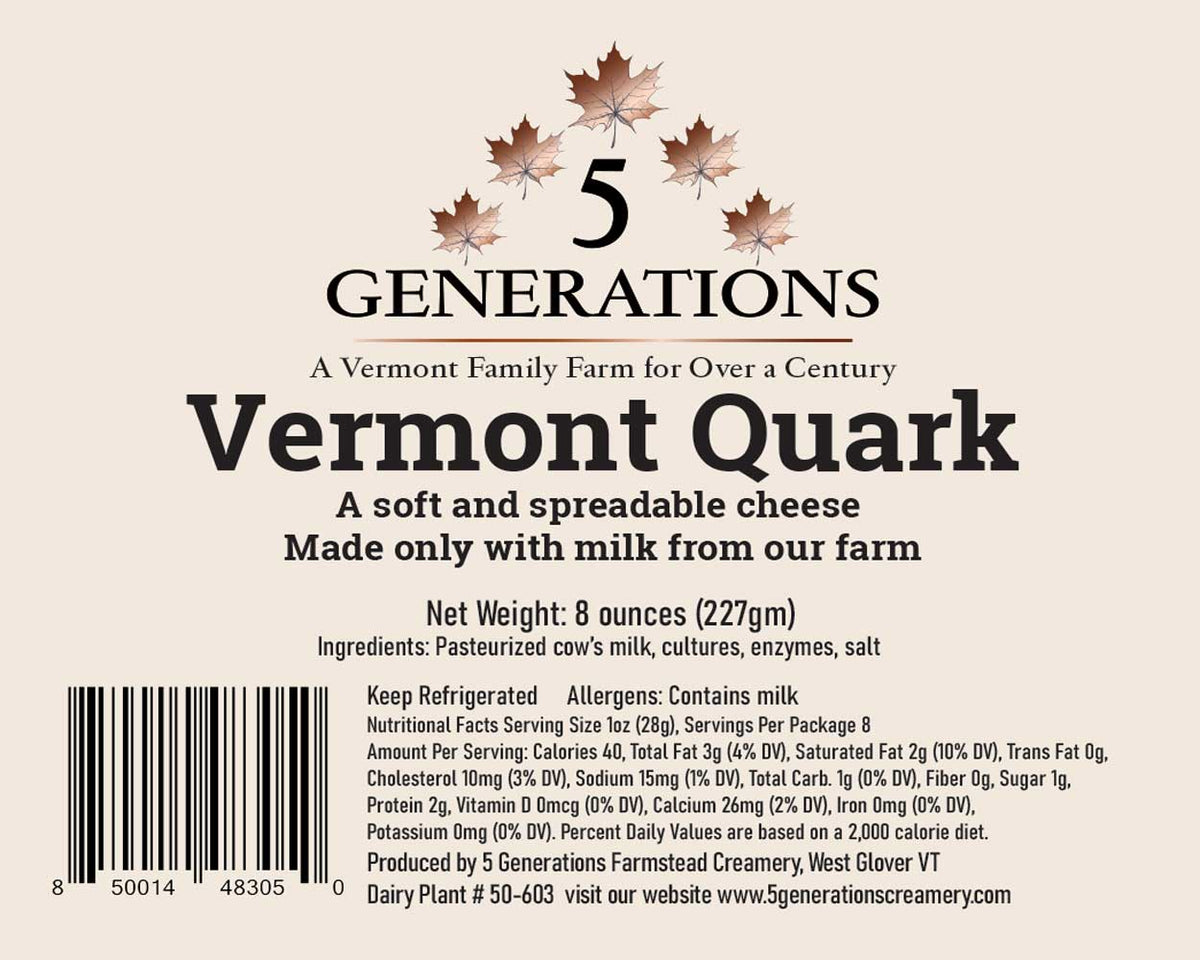
Arla’s linked page publishes the 0.2%-fat reference shown above. A separate Arla recipe change notice describes a 0%-fat Mild Kvarg formulation with less protein. These sources do not establish that every tub now on sale matches this reference; check the package rather than combining figures from different recipes.
5 Generations markets Vermont Quark as a soft, spreadable cheese, with toast and dip suggestions. Its higher fat and lower protein per 100 g than this Arla reference illustrate a difference between these formulations. They do not show that all American quark is high-fat, all Swedish kvarg is low-fat, or that either country has one standard recipe.
Vermont Quark’s added sugar remains unknown because its source label does not declare it separately. Its older gallery label also needs confirmation against current packaging. Our source check verifies the published figures, not a newly purchased package or retailer stock.
Exploring quark and alternatives in the US
If you want a thick, protein-rich snack, start with the label and texture. A marketing name alone does not establish that a product is quark. In a US dairy aisle, plain skyr and Greek yogurt are useful categories to explore. Similar nutrition does not establish identical cultures, flavor, texture, or cooking behavior.
- Compare protein on the same basis. A large serving can make a protein number look bigger. Use per 100 g to compare, then per serving for the portion you plan to eat.
- Check fat separately. If a low-fat style is your aim, read the actual fat line and milkfat description. Our US comparison lists protein, calories, and sugar; follow each source label to check fat.
- Look for thick and smooth. A spoonable description is a starting point. Nutrition numbers alone cannot tell you whether a product will have the texture you enjoy.
- Choose plain or flavored deliberately. Check ingredients, sugar, and sweeteners for the specific flavor. Neither its name nor a different flavor’s label settles those questions.
Two checked US labels offer a starting point for protein comparison:
- Icelandic Provisions Traditional Plain Skyr — 5.3 oz: 17 g protein per 1 container, 5.3 oz (150 g), or approximately 11.3 g per 100 g. Manufacturer nutrition.
- FAGE Total 0% Plain Greek Yogurt — 5.3 oz: 16 g protein per 1 container (150 g), or approximately 10.7 g per 100 g. Manufacturer nutrition.
These labels help compare nutrition; they do not establish an identical substitute for any particular quark. For the production and practical differences, read our guides to quark vs skyr and quark vs Greek yogurt. Explore the skyr, Greek yogurt, or quark filters. A listing records a product and its sources, not nearby stock.
What about older American quark brands?
The US has also seen spoonable, yogurt-style quark marketed for protein. A 2018 Wünder Creamery launch account and 2016 reporting on Elli Quark document that history. They do not prove current sales. Neither brand is in our live comparison: current manufacturer nutrition and US availability still need verification.
Using quark in the kitchen
A cold bowl is an easy place to start: add fruit or use plain quark as a base for a savory dip. Arla also describes kvarg in cooking and baking. Match the recipe to the style you have; a richer spread and a lean spoonable tub can behave differently.
For cheesecake, bread, or a firm filling, choose a recipe developed for the ingredient and follow its heating instructions. We have not tested a universal substitution ratio between quark, skyr, Greek yogurt, and cream cheese. The nutrition comparison above is a label comparison, not a recipe test.
Sources and review notes
Process descriptions use the references below. Manufacturer sources describe their own products. Nutrition examples use our checked US records or explicitly identified overseas editorial references, with individual source dates, rather than category averages. Overseas references are not US directory listings.
- Canadian Dairy Commission — Quark Cheese
- Arla Sweden — What is kvarg? (Swedish)
- Arla Sweden — Mild Kvarg Naturell, 1000 g: product and nutrition (Swedish)
- Arla Sweden — Kesella kvarg: cream-enriched cooking varieties (Swedish)
- Arla consumer service — Mild Kvarg recipe change notice (Swedish)
- 5 Generations Creamery — Fresh Vermont Quark
- FDA — Added Sugars on the Nutrition Facts Label
- Barrel — Wünder Creamery website launch, May 2, 2018 (historical)
- Dairy Foods — Elli Quark, April 6, 2016 (historical)
Editorial references reviewed Oct 29, 2026. Brand formulations and source pages can change; a source check does not verify current packaging or retailer stock.
Put the labels side by side.
Explore checked US products, filter by category, and compare nutrition on the same basis.
Open the comparison